


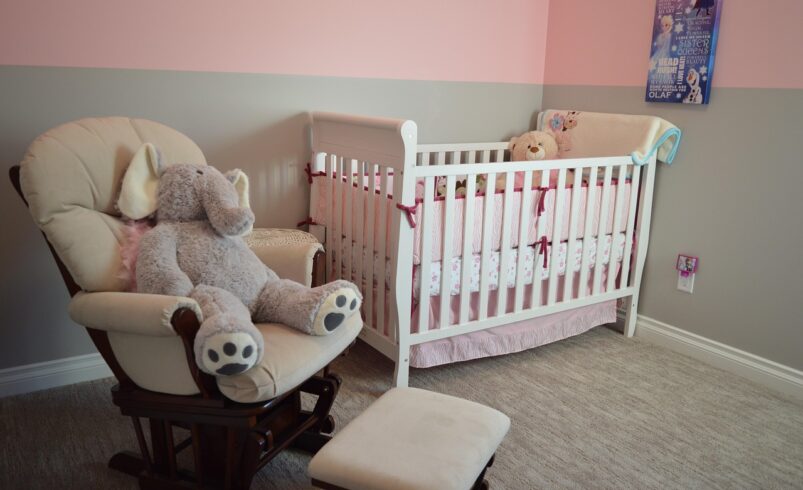

Quick answer: Sage and cream, boho neutrals, woodland and warm terracotta palettes all work beautifully for any baby and are easy to accessorize. Use a convertible crib, add wall shelves and baskets, choose furniture that does double duty, and keep the palette light to make the room feel bigger.
The best nursery ideas balance style and function — a calm, beautiful space that is also practical for those middle-of-the-night moments.
From soothing color palettes to clever small-space storage, here are 30 nursery ideas to help you design a room you and your baby will love. 🛏️

How to Plan Your Nursery
Begin with a color palette and a simple theme, then choose safe, sturdy furniture — a convertible crib, a dresser that doubles as a changing table, and a comfy chair. Plan your storage early, and layer your lighting with a soft lamp and blackout curtains for better naps.

Gender-Neutral Nursery Ideas
Timeless palettes that suit any baby:
- Sage & cream with natural wood accents
- Boho neutrals with rattan, macrame and soft textures
- Woodland with forest animals and earthy greens
- Warm terracotta and clay tones
- Monochrome + wood for a modern, minimal look
Baby Girl Nursery Ideas
Soft and sweet without being over the top:
- Blush & gold for a gentle, elegant feel
- A floral accent wall or peel-and-stick mural
- Boho pink with dried grasses and neutral textures
- Vintage-inspired details and soft lace touches
Baby Boy Nursery Ideas
Fresh, handsome looks that grow with him:
- Navy & white for a crisp, classic room
- Safari with friendly animals and warm neutrals
- Nautical stripes and anchors
- Modern gray + wood for a calm, contemporary space
Small Nursery Storage Ideas
Make the most of every inch:
- A convertible crib that grows into a toddler bed
- Wall shelves above the changing area
- Labeled baskets and bins for toys and supplies
- A closet organizer sized for tiny clothes
- Under-crib storage for extra blankets and diapers
Cozy Finishing Touches
The details that make a nursery feel complete:
- Blackout curtains for daytime naps
- A soft, washable rug
- Wall art or a personalized name sign
- A comfortable glider or rocker
- Warm, dimmable night lighting
Nursery Safety Basics
Beautiful is important, but safe comes first. Anchor dressers and shelves to the wall, keep the crib bare for sleep (no pillows, bumpers or loose blankets), and place the crib away from cords and windows. For trusted safe-sleep guidance, see the NICHD Safe to Sleep program.
Budget-Friendly Nursery Ideas
You do not need a big budget for a beautiful room. These nursery ideas keep costs down without sacrificing style:
- Shop secondhand for a dresser and refresh it with new knobs and paint
- Use removable wallpaper or a decal for an easy accent wall
- Frame free printable art for gallery-wall charm
- Add warmth with a thrifted rug and soft, layered textiles
A few smart nursery ideas go a long way — put your budget into a safe crib and mattress first, then decorate with affordable finishing touches.
Start With Three Zones
Every nursery is really three stations. Get their positions right and a small room works; get them wrong and a large one does not.
| Zone | What it needs | Common mistake |
|---|---|---|
| Sleep | Crib, blackout, clear space around it | Crib under a window or near blind cords |
| Change | Waist-height surface, supplies within arm’s reach | Supplies stored across the room |
| Feed | A chair you can get out of quietly, a dimmable light | A beautiful chair that is hard to rise from |
Lighting Is the Detail Most People Miss
A single bright ceiling light is the default in most rooms and the wrong one here. You need three levels: full light for tidying and dressing, a dimmable lamp for feeds, and something very dim for checking on a sleeping baby without waking them.
A dimmer switch is the cheapest meaningful upgrade to any nursery. After that, a warm-toned lamp beside the feeding chair and a plug-in nightlight at floor level cover the other two, and none of it needs an electrician.
Blackout matters more than people expect, and it matters most in summer. A blackout shade under the curtains is worth more to daytime naps than any other single purchase in the room – but fit it cordless, because looped blind cords near a crib are one of the few genuine hazards in a nursery.
Nursery Ideas for a Shared or Temporary Room
Plenty of babies do not get a room of their own, and plenty of nurseries start as a corner of the parents’ bedroom for the first six months, because that is what safe sleep guidance recommends anyway. Neither situation needs a compromise version of the room – it needs a different plan.
In a shared adult bedroom, the nursery is really just two zones: sleep and change. The feeding chair can be the bed. Keep the crib on the side away from the door so somebody coming in late does not walk past a sleeping baby, and put the changing supplies in a single basket that can be carried rather than a fixed station.
In a room shared with an older sibling, the priority is sound rather than space. White noise for the baby and an early lights-out routine for the older child do more than any furniture arrangement. Stagger the bedtimes by 30 to 45 minutes and put a low bookshelf between the beds as a visual divider.
Both setups are temporary, which is the useful part – nothing needs to be permanent, and money is better spent on things that will move into a full nursery later.
What to Buy and What to Skip
Nursery shopping lists are long, and a good half of what is on them is optional. The items below are the ones parents consistently say earned their place, and the ones that consistently did not.
| Worth buying | Why | Can wait or skip |
|---|---|---|
| Blackout shade (cordless) | Transforms daytime naps | Crib mobile |
| Dimmer or a warm lamp | Every night feed uses it | Diaper pail – a lidded trash can works |
| Wide chest of drawers | Doubles as the changing surface | Dedicated changing table |
| Baskets, several | Storage that moves with you | Closet full of newborn clothes |
| A comfortable chair you can rise from | Used for hours | Rocking chair with no arms |
A Sensible Order to Do It In
Most nursery ideas fail at the sequencing rather than the design. Paint before furniture arrives, build furniture before 36 weeks, and wash and put away clothes last – they are the part that takes an evening and the part that can be done sitting down.
Leave the decorative layer until the end deliberately. Prints, garlands and shelves are easy to add at any point, and half of them will end up somewhere different once you have actually used the room for a couple of weeks.
Nursery Ideas That Save Money Without Looking Cheap
The expensive parts of a nursery are the furniture and the paint, and neither has to be bought new. Dressers and chests of drawers hold their quality well secondhand (buy the crib and mattress new), and a chest of drawers from anywhere becomes a changing station with a $20 mat on top. The other item never to buy used is a car seat, because its history is unknowable and it has an expiration date.
Paint one wall rather than four. A single painted or papered wall behind the crib gives the room its character, costs a quarter as much, and is far quicker to change when the room becomes a toddler’s.
Skip anything sold specifically as nursery furniture that has a normal-furniture equivalent. Nursery-branded storage, bins and shelves carry a premium for the word rather than the build, and the room will look better with ordinary good furniture in it than with a matching set of the cheapest branded pieces.
The best-value nursery ideas are almost always textiles – a rug, a blanket, prints, a garland. They cost little, change the room completely, and are the part you can swap in two years without touching anything structural.
Related Guides
Planning the rest of the day? These guides go deeper on each piece:
- Boho nursery ideas
- Small nursery ideas
- Gender-neutral nursery ideas
- Nursery organization ideas
- Cosy fall nursery ideas
Frequently Asked Questions
What are the best gender-neutral nursery ideas?
Sage and cream, boho neutrals, woodland and warm terracotta palettes all work beautifully for any baby and are easy to accessorize.
How do I design a small nursery?
Use a convertible crib, add wall shelves and baskets, choose furniture that does double duty, and keep the palette light to make the room feel bigger.
What do I really need in a nursery?
The essentials are a safe crib and mattress, a dresser or changing station, a comfortable chair, storage, and soft lighting. Everything else is decor.
How can I make a nursery safe?
Anchor all furniture, keep the crib bare for sleep, secure cords and blinds, and follow safe-sleep guidelines from a trusted source like Safe to Sleep.
Final Thoughts
Great nursery ideas come together when style meets safety — so pick a palette you love, keep the essentials practical, and add cozy touches that make the room feel like home.
Planning the shower too? Browse our baby gift ideas and baby shower themes next. 💕
Love It? Pin It for Later
Planning takes more than one sitting. Save this guide to your baby shower board so it is waiting for you when you start buying and building: